

How to Legally Protect Your Course Content and Brand Name
Learn how to legally protect your course content and brand name using trade marks, copyright, contracts and confidentiality and how licensing can help you grow your training business through trusted partners.

Dobra nazwa marketingowa może być słabym znakiem towarowym
Dobra nazwa marketingowa może być prawnie słabym znakiem towarowym. Wyjaśniam, dlaczego opisowa nazwa może być trudniejsza do ochrony i kiedy warto sprawdzić jej zdolność odróżniającą.

A Good Marketing Name Can Still Be a Weak EU Trade Mark
A name can work extremely well in marketing and still be difficult to protect as an EU trade mark. Before committing to a brand, businesses should consider not only availability but also descriptiveness, distinctiveness and the strength of the right they are likely to obtain.

Who Should Own the EU Trade Mark: Founder, Company or Distributor?
The applicant named in an EU trade mark application is acquiring a business asset. Founder ownership, company ownership and distributor ownership can have very different consequences for licensing, enforcement, investment and future transactions.
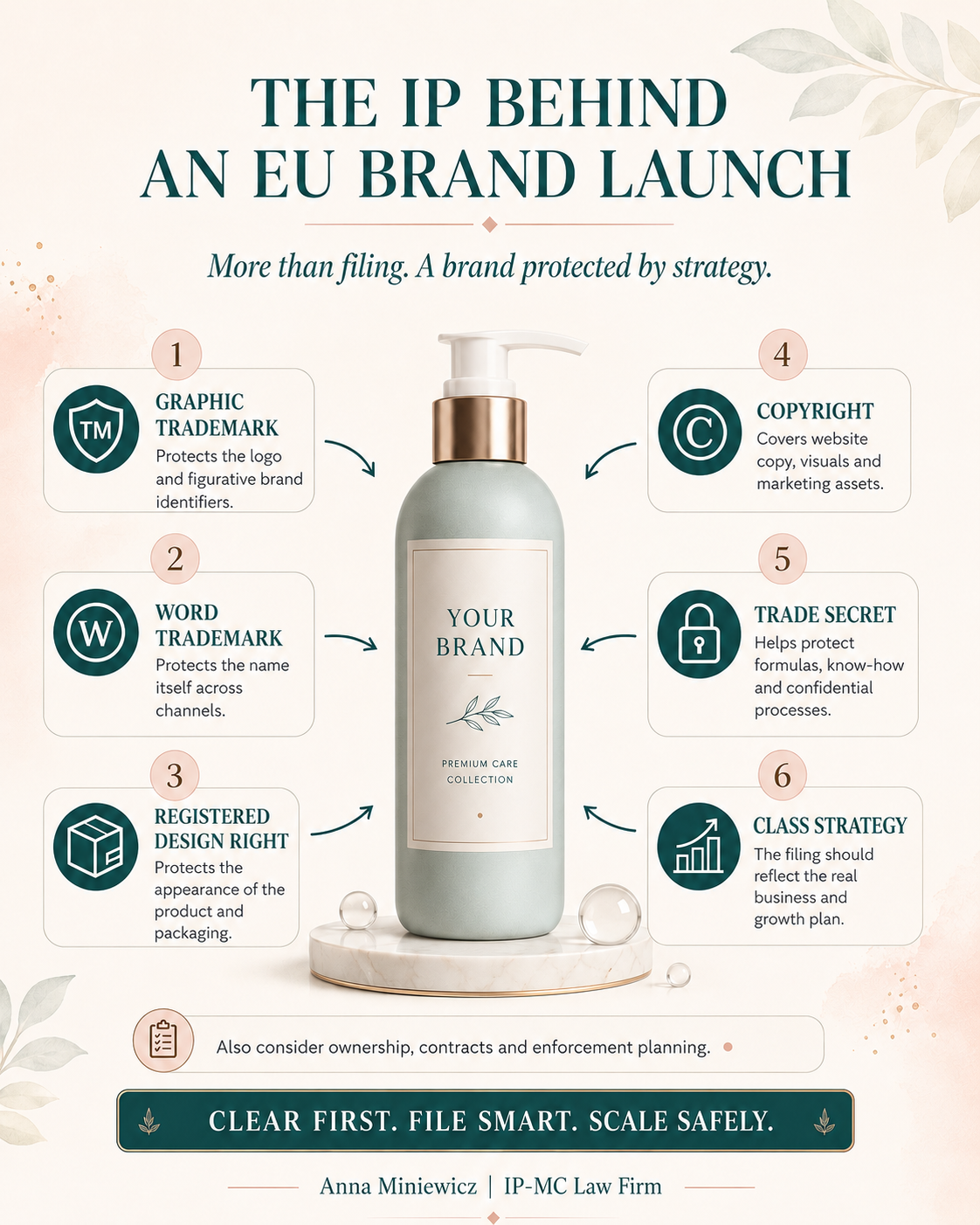
Protecting Product Shape and Packaging in the EU: Which IP Right Fits?
For design-led brands, the name may be only one part of the IP strategy. Product shape, packaging, graphics and other visual features can require different layers of protection through EU designs, trade marks, copyright and, in some cases, national unfair competition law.

Bringing an Existing Brand into the EU: What Should Be Reviewed Before Filing?
An established brand outside Europe does not automatically come with a ready-made EU trademark strategy. Before extending protection to the EU, businesses should review local clearance, registrability, ownership, class coverage and whether the existing IP portfolio still reflects how the brand will operate in Europe.

Amazon Brand Registry: Why the Underlying Trade Mark Strategy Still Matters
A trademark may be enough to access Amazon Brand Registry and still be poorly designed for the business behind it. Marketplace-native brands should consider clearance, ownership, class coverage and enforcement strategy rather than treating an EU trademark filing as a platform formality.

Before You Sell in the EU: Is Your Brand Name Actually Protectable?
A company can be commercially ready to enter the EU market and still not be legally ready to use or protect its brand there. Before launch, businesses should check not only domains and social media handles, but also EU trademark risks: earlier rights, descriptiveness, class strategy and whether the brand can actually be enforced.
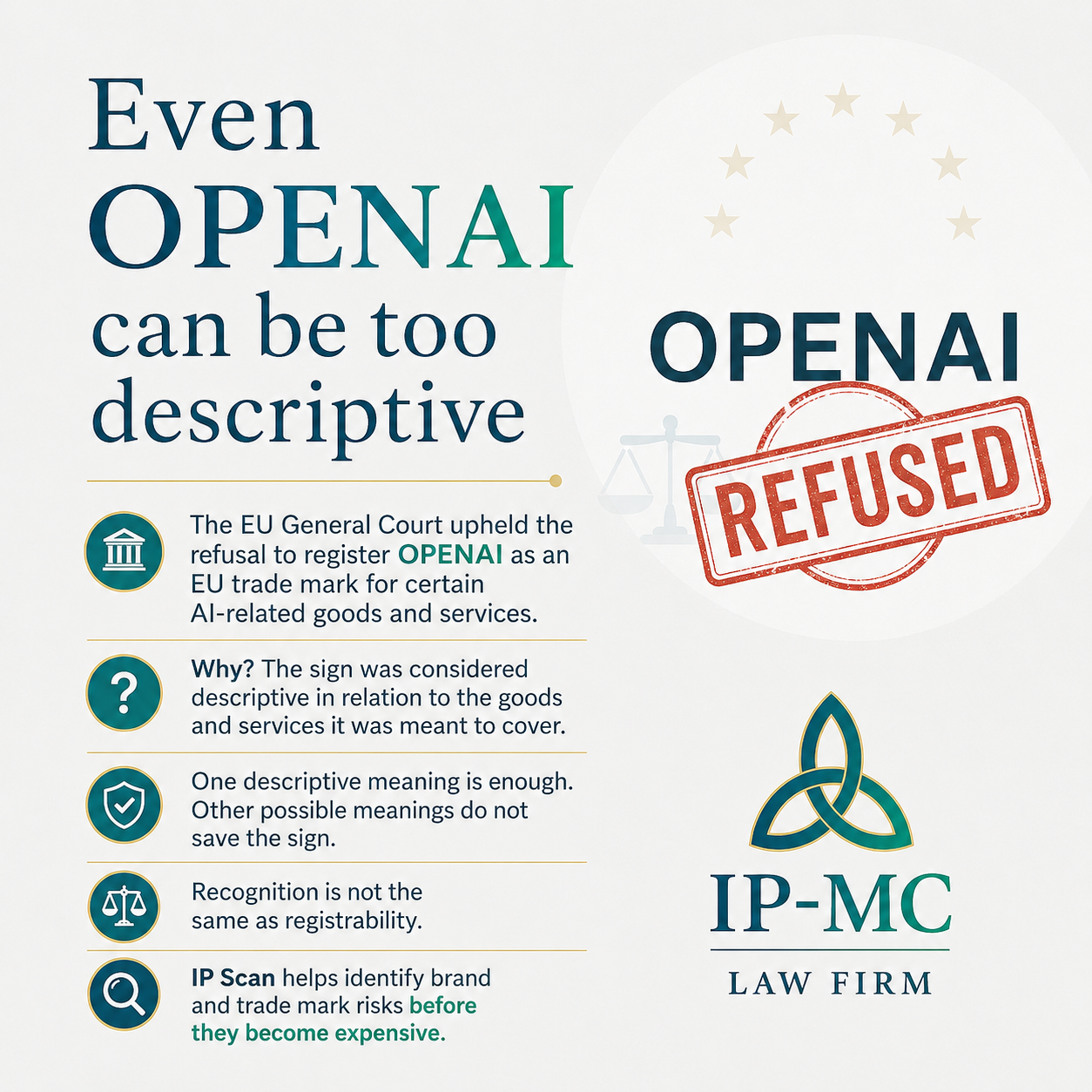
Even OPENAI Can Be Too Descriptive: What Founders Should Learn from the EU Trade Mark Refusal
The General Court upheld EUIPO’s refusal to register OPENAI as an EU trade mark for certain AI-related goods and services. The case is a useful reminder that a famous name is not always a strong trade mark: if one possible meaning of a sign describes the goods or services, registration may be refused. For founders, it shows why brand names should be checked legally before launch and why IP Scan can help identify trade mark risks before branding becomes expensive to change.

Not Every Case Is Won with One Strong Legal Argument
Not every case is won with one strong legal argument.
Sometimes, the most important elements are calm strategy, a proper assessment of risk, and communication that allows the other side to understand what is genuinely at stake.
In this matter, the client needed an administrative proceeding to be completed within a specific timeframe in order to submit the required documents and sign a lease agreement. There was no legal provision requiring the authority to issue its decision exactly when the client needed it. But there was a way to explain, clearly and respectfully, why time mattered.
In the end, the decision was issued in time, the client submitted the documents, and the lease agreement was signed.
This case is a reminder that the role of a lawyer is not always to send another letter, apply more pressure, or make one decisive legal move. Sometimes it is to set the strategy, explain the options clearly, and create the space in which a solution can appear.

Nie każdą sprawę wygrywa się jednym mocnym argumentem prawnym.
Nie każdą sprawę wygrywa się jednym mocnym argumentem prawnym.
Czasem najważniejsze okazują się: spokojna strategia, właściwe rozpoznanie ryzyk i komunikacja, która pozwala drugiej stronie zrozumieć realne znaczenie sprawy.
W tej sprawie klient potrzebował zakończenia postępowania administracyjnego w konkretnym terminie, aby móc uzupełnić dokumenty i podpisać umowę najmu. Nie było przepisu, który nakazywałby organowi rozstrzygnąć sprawę dokładnie wtedy, kiedy było to potrzebne. Była jednak możliwość rzeczowego pokazania, dlaczego czas ma znaczenie.
Ostatecznie decyzja została wydana w terminie, klient uzupełnił dokumenty i podpisał umowę.
To dobry przykład tego, że rola prawnika nie zawsze polega na kolejnym piśmie, nacisku czy „mocnym ruchu”. Czasem polega na dobrym ustawieniu strategii, wyjaśnieniu klientowi opcji i stworzeniu przestrzeni, w której rozwiązanie może się pojawić.

Can a Trademark Tell a False Heritage Story? What Founders Can Learn from the Fauré Le Page Case
Brand history is powerful.
A date on a logo, a reference to a founding year, a city name, or a story about craftsmanship can instantly change how customers perceive a product. It can suggest tradition, expertise, quality, authenticity, and prestige.
For luxury brands, this kind of heritage can be especially valuable. A brand that appears to have existed for centuries may feel more established, more trustworthy, and more desirable than a new market entrant.
But trademark law draws an important line.
A brand story can support commercial positioning.
It should not mislead consumers.

5 błędów przy ochronie marki w Polsce i jak ich uniknąć
Dla wielu founderów nazwa marki jest jedną z pierwszych naprawdę ważnych decyzji biznesowych. Pojawia się na stronie internetowej, w pitch decku, w rozmowach z inwestorami, w social mediach, w sklepie internetowym, na opakowaniach, w umowach, w kampaniach reklamowych i — z czasem — w świadomości klientów.
Mimo to ochrona marki bardzo często jest traktowana jako coś, czym można zająć się „później”.

5 Trademark Mistakes Founders Make in the EU and How to Avoid Them Before Launch
For many founders, the brand name is one of the first major business decisions they make — and one of the easiest to underestimate legally.
A name may look available because the domain is free, the Instagram handle is unused, and nothing obvious appears on Google. But that does not mean it is safe to use or register as a trademark.
In the EU, trademark risk depends not only on identical names, but also on similar earlier marks, related goods and services, market context, and potential likelihood of confusion. This means a founder can invest heavily in a brand, launch publicly, and only later discover that the name is vulnerable to opposition, conflict, or even a forced rebrand.
That is why trademark strategy should not begin after success. It should begin before the brand becomes expensive to change.
In this article, I explain five common trademark mistakes founders make in the EU — and how to avoid them before launch, fundraising, or international expansion.
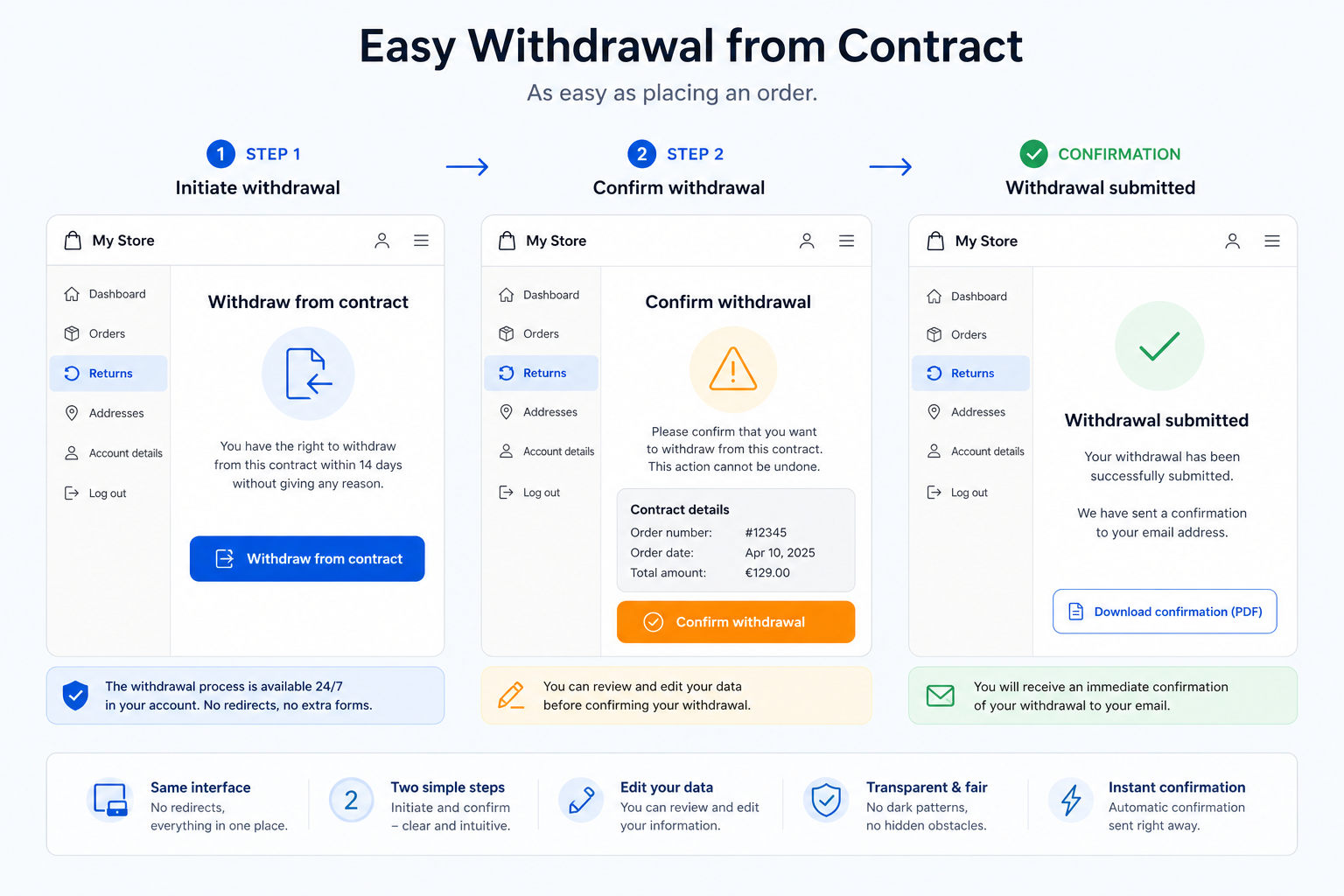
New Obligations for E-Commerce from 19 June 2026: How to Implement “Easy Withdrawal” (UX, Legal, IT)
New EU rules require e-commerce platforms to make contract withdrawal as easy as purchase. Learn what needs to change in your UX, backend, and compliance setup before the 19 June 2026 deadline.

SME Fund 2026: dofinansowanie na IP Scan i rejestrację znaków towarowych może zostać wstrzymane
SME Fund to program umożliwiający uzyskanie dofinansowania m.in. na IP Scan oraz rejestrację znaków towarowych. Sprawdź, co oznacza możliwe wstrzymanie naboru w 2026 r. i co warto wiedzieć z perspektywy przedsiębiorcy.

Nowe obowiązki dla e-commerce od 19 czerwca 2026: jak wdrożyć „łatwe odstąpienie od umowy” (UX, prawo, IT)
Projekt UC82 wprowadza nowe obowiązki dla e-commerce, w tym dwuetapowy mechanizm odstąpienia od umowy bezpośrednio w interfejsie. Sprawdź, jakie zmiany czekają przedsiębiorców i jak przygotować swój sklep online przed 19 czerwca 2026 r.

Beware of Fake Payment Requests for Trademark Registration
Fake payment requests related to trademark registration are becoming increasingly sophisticated. Fraudsters use publicly available data and impersonate official institutions. Learn how to spot such scams and what to do if you have already made a payment.

Uwaga na fałszywe wezwania do uiszczenia opłat za rejestrację znaku towarowego
Fałszywe wezwania do opłat za rejestrację znaków towarowych stają się coraz bardziej przekonujące. Oszuści wykorzystują publiczne dane i podszywają się pod Urząd Patentowy. Sprawdź, jak rozpoznać takie pismo i co zrobić, jeśli doszło do przelewu.

CJEU: Furniture May Be Protected by Copyright – Landmark Judgment of 4 December 2025 (C-580/23 and C-795/23)
On 4 December 2025, the Court of Justice of the European Union clarified that works of applied art — including furniture — may qualify for copyright protection under the same originality standard applicable to other works. The Court confirmed that a utilitarian object can be protected if it reflects the author’s free and creative choices, even where technical constraints are present. What matters is not artistic merit, but the existence of identifiable creative expression. Infringement, in turn, requires the reproduction of recognizable creative elements — not merely overall similarity.